
10 min read
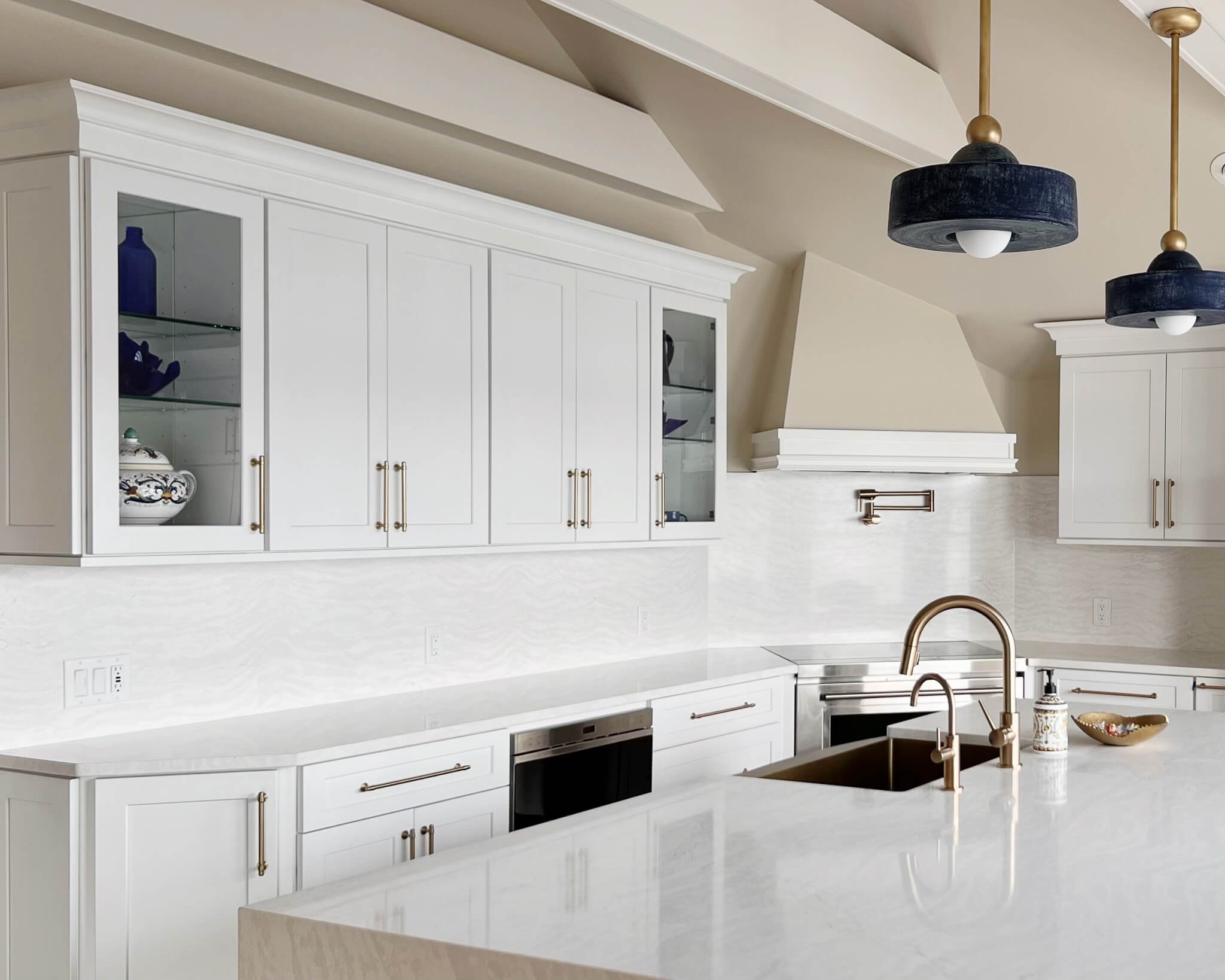
January is often when planning begins quietly. You may not be ready to make final decisions yet, but you’re starting to notice what works, gather ideas, and imagine how your kitchen or bath could better support everyday life.
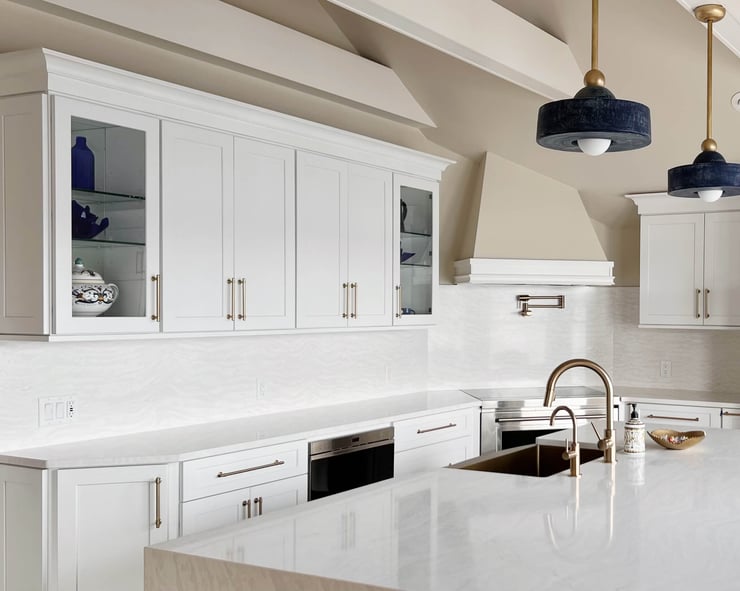
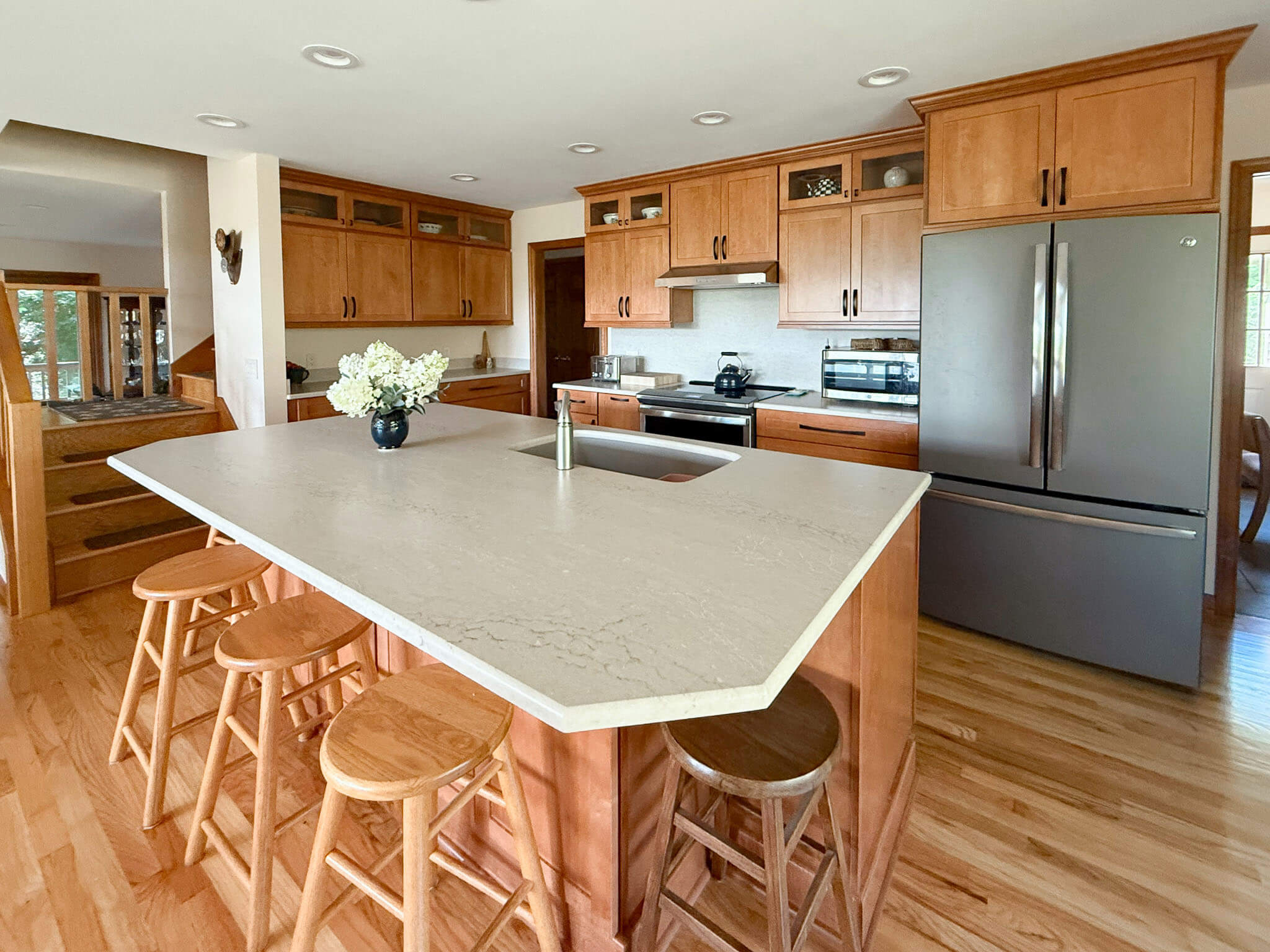
Countertops are often one of the first elements people focus on, but the best choices are rarely about appearance alone. They're about performance, daily wear, ease of care, and how a surface supports the way you live. For many homeowners, quartz countertops have become a perfect choice, because they offer durability, consistency, and beauty without asking for constant upkeep.
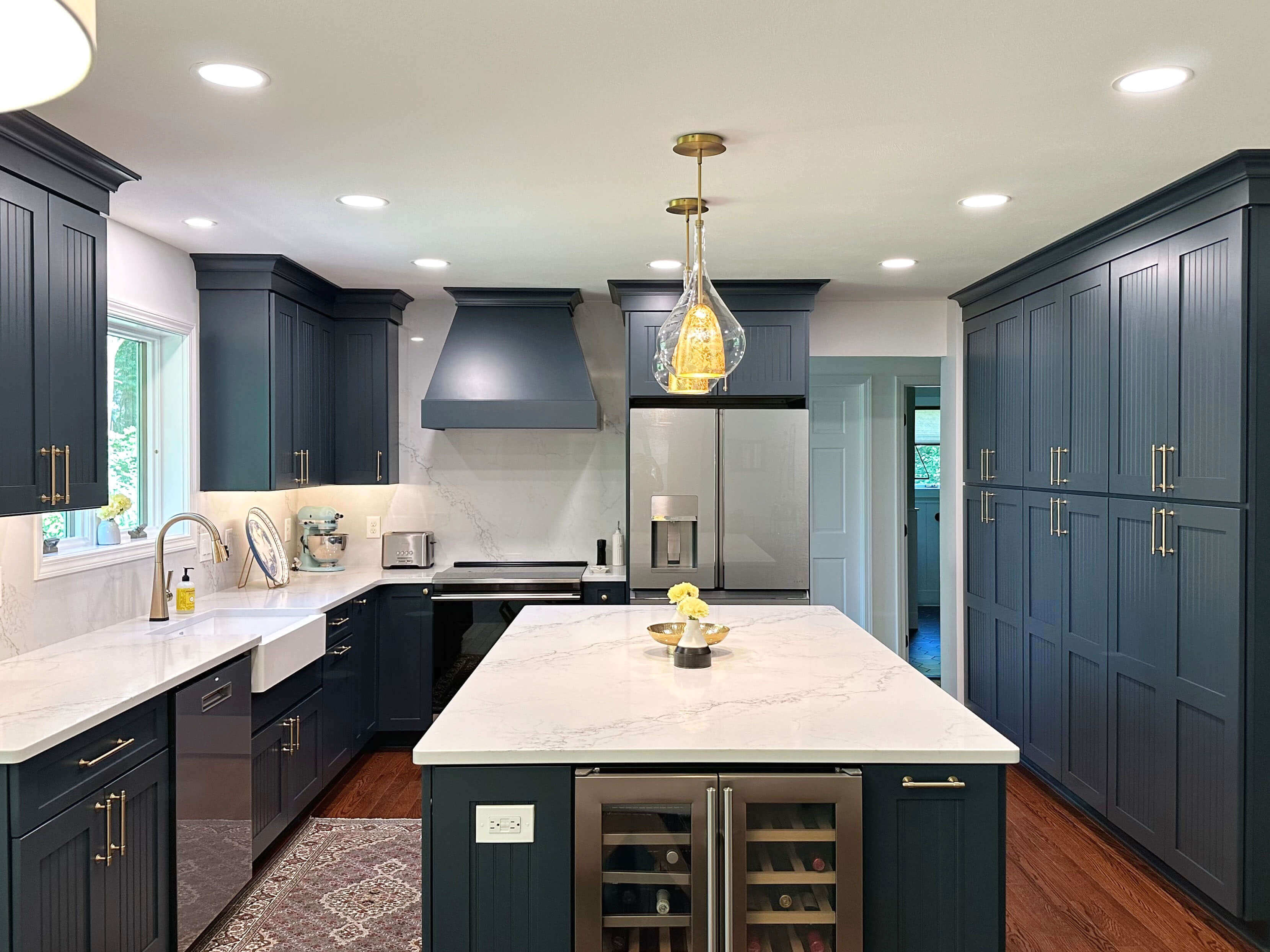
If you're early in this planning stage, we'll be hosting a free Kitchen & Bath Seminar on January 28th, where our team will walk through real project examples, discuss timelines, selection considerations, and installation, and answer questions in a relaxed, no-pressure setting.
👉 Register here for our upcoming seminar.
Understanding Quartz as an Engineered Stone
Quartz countertops are an engineered stone made from natural quartz crystals combined with resins and pigments. This process creates quartz slabs that are consistent, durable, and well-suited for interior spaces where reliability matters.
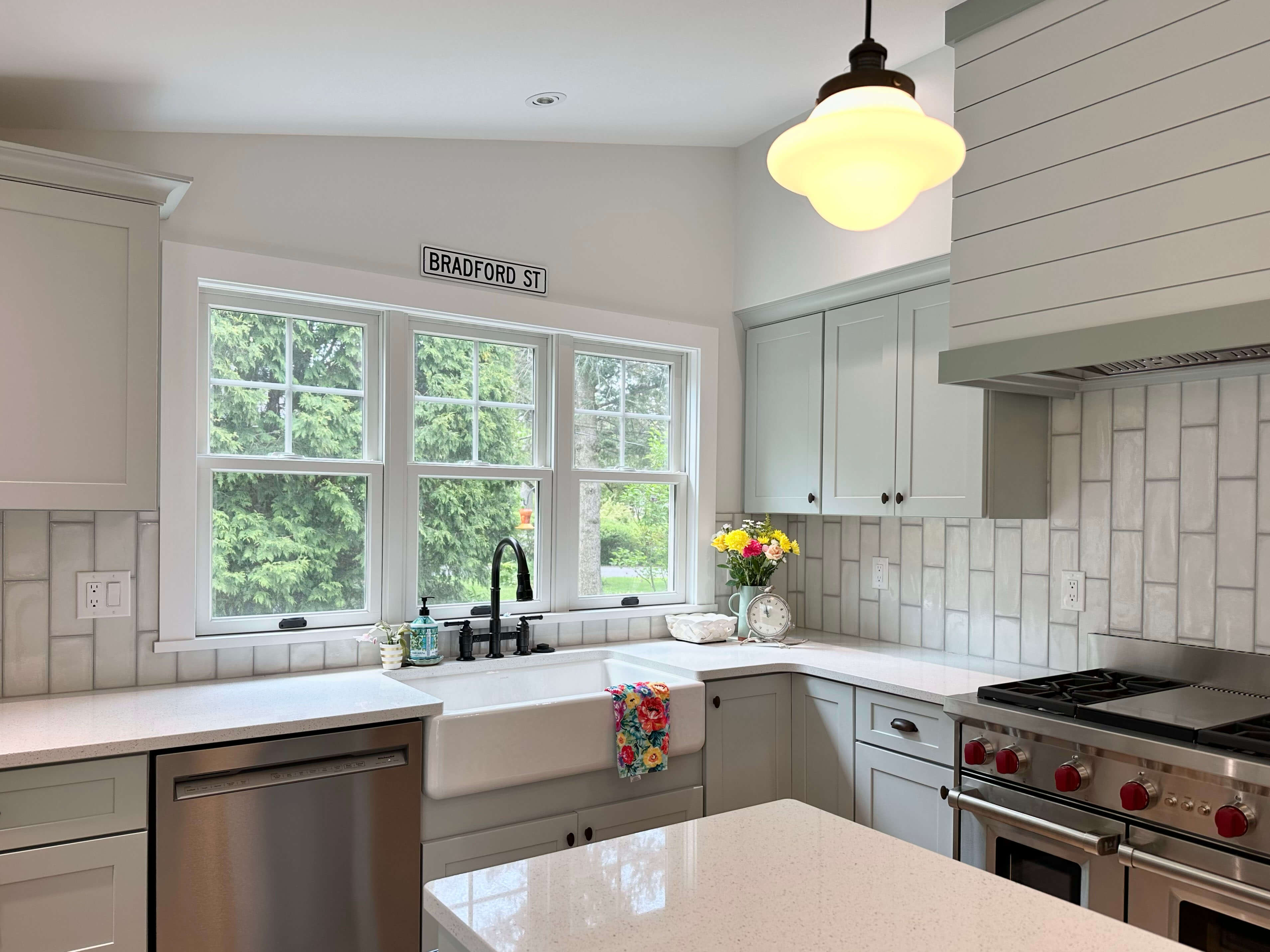
Quartz countertops are engineered to be stronger than natural stone, providing a consistent appearance in color and pattern. The resins used in quartz countertops allow for a variety of finishes, including polished, honed, or embossed treatments.
Because quartz is non-porous, it does not absorb liquids, making it highly resistant to staining and bacterial growth. This stain resistance is one of the reasons quartz countertops perform so well in kitchens and bathrooms, where spills, sinks, wet areas, and moisture are a part of everyday life.
Unlike some natural stone countertops, quartz does not require sealing, which means little maintenance over time. For homeowners who want beauty without constant care, that predictability often makes quartz feel like the perfect countertop material.
What Quartz Countertops Are Made Of
Quartz countertops are typically composed of:
-
Approximately 90–95% ground natural quartz
-
Resins and pigments that bind the surface and provide color
Some options incorporate recycled materials, adding subtle visual interest while supporting sustainability goals.
Popular Quartz Countertop Brands
There are many manufacturers offering quartz countertops in a wide range of finishes. Some that we often work with are MSI, Busch, and Thruway Stone.
Choosing a brand is less about the name and more about how the surface works with your cabinetry, lighting, and overall design goals.
Why Quartz Countertops Work in So Many Homes
Quartz countertops are one of the most versatile stone surfaces available for indoor use, offering both performance and aesthetics. In some homes, they become the unifying surface throughout the space. In others, they play a supporting role, paired with wood, laminate, or natural stone to create balance, contrast, and a look that can feel either timeless or modern.
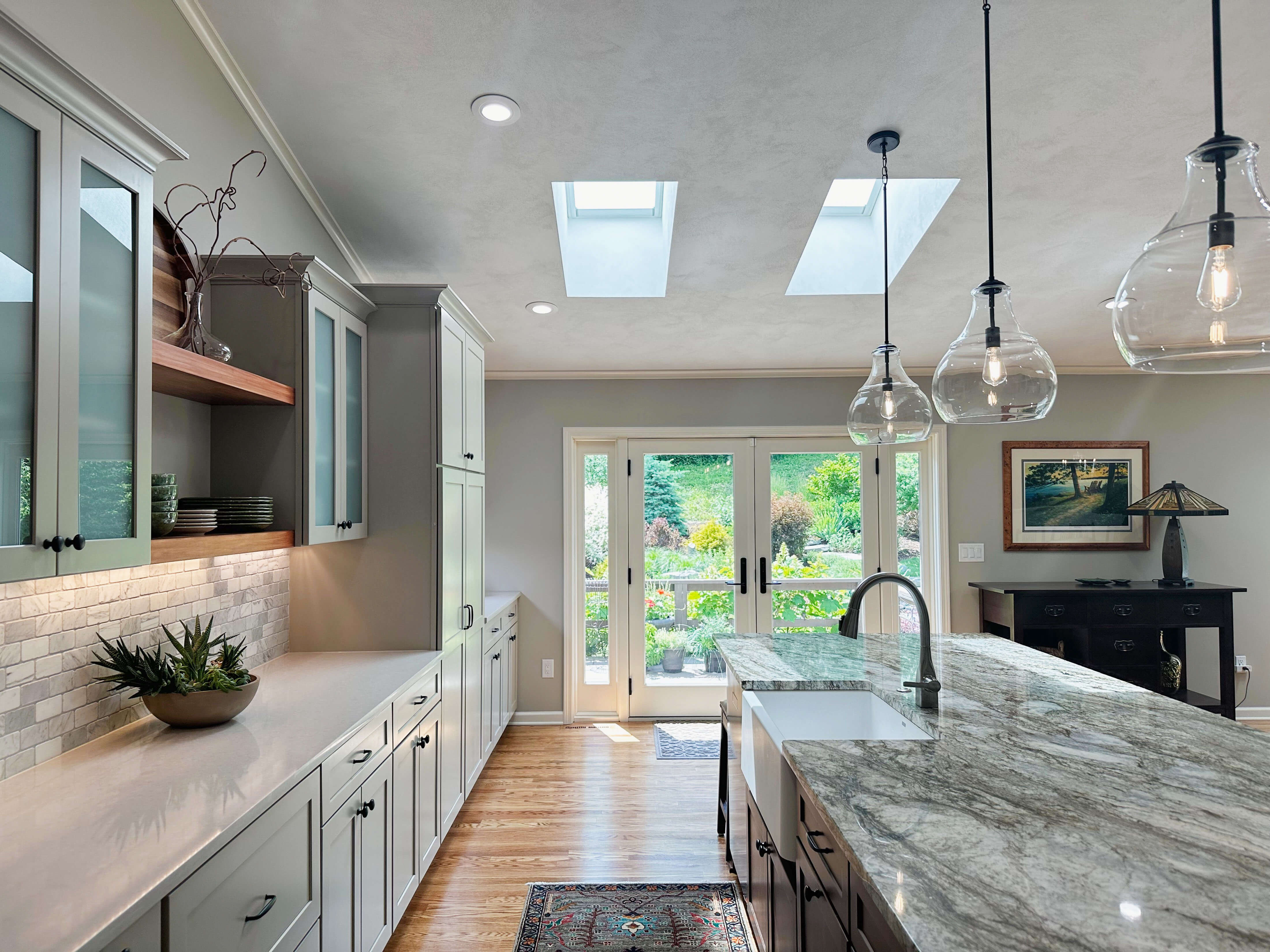
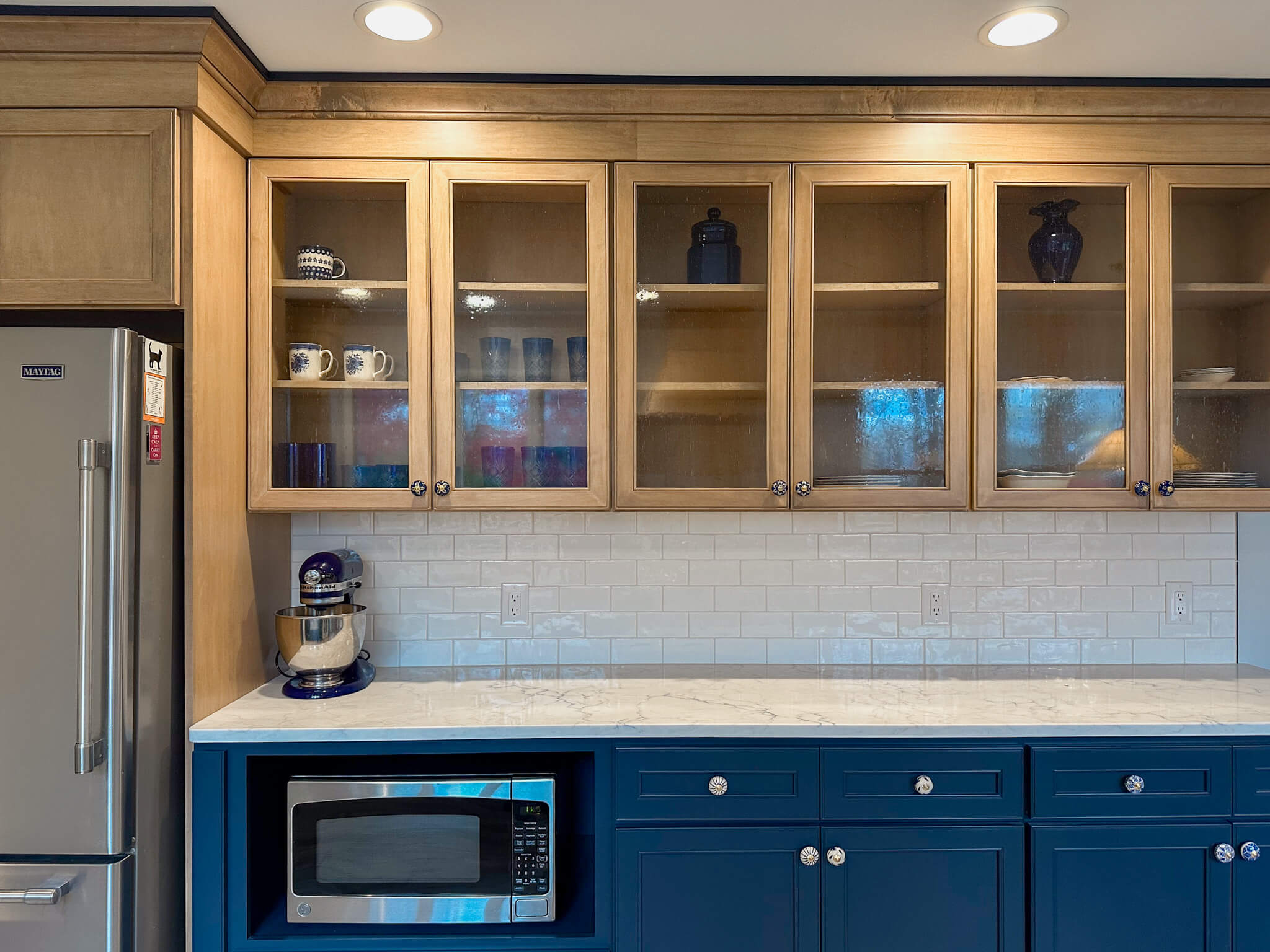
In one of our projects, a granite island anchors the room while quartz wraps the perimeter, providing durability where most prep happens. In another, a partial butcher block countertop in a warm wood is paired with quartz to blend modern sensibility with natural texture, creating a space that feels functional without feeling overdesigned.
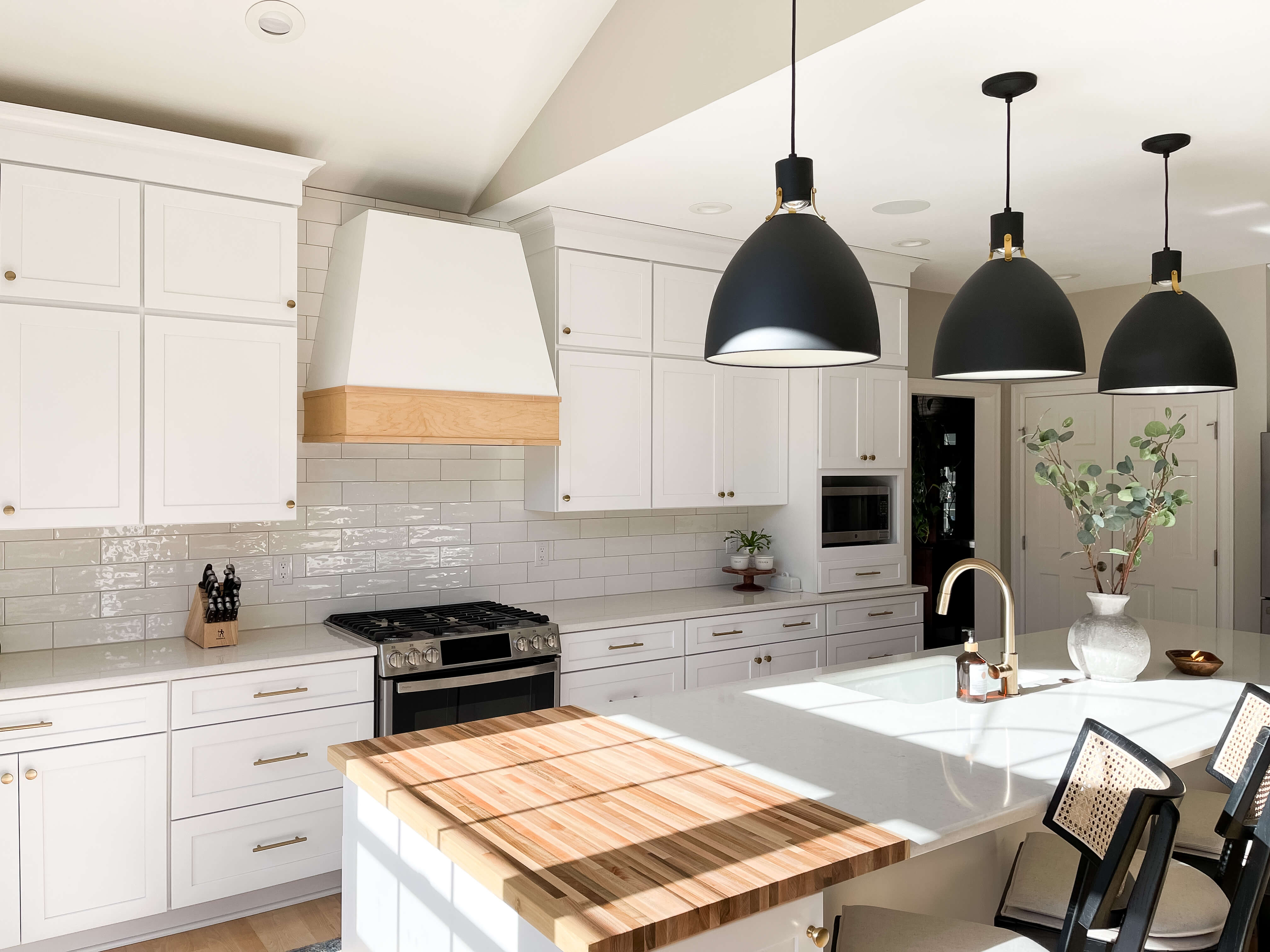
Quartz does not require everything to match. It allows for thoughtful layering, which often results in ktichens that feel personal, comfortable, and well considered for everyday life.
Quartz Countertops for Kitchens and Bathrooms
Quartz countertops perform well beyond the kitchen, making them a strong choice for bathrooms and other high-use areas. Their resistance to moisture and mold makes them well-suited for daily exposure to water.
Quartz is commonly used for:
-
Countertops and islands
-
Backsplashes
-
Bathroom vanities
-
Laundry rooms
-
Built-in desks or coffee stations
-
Floors in select interior applications
Using Quartz in Bathrooms, Including Shower Walls
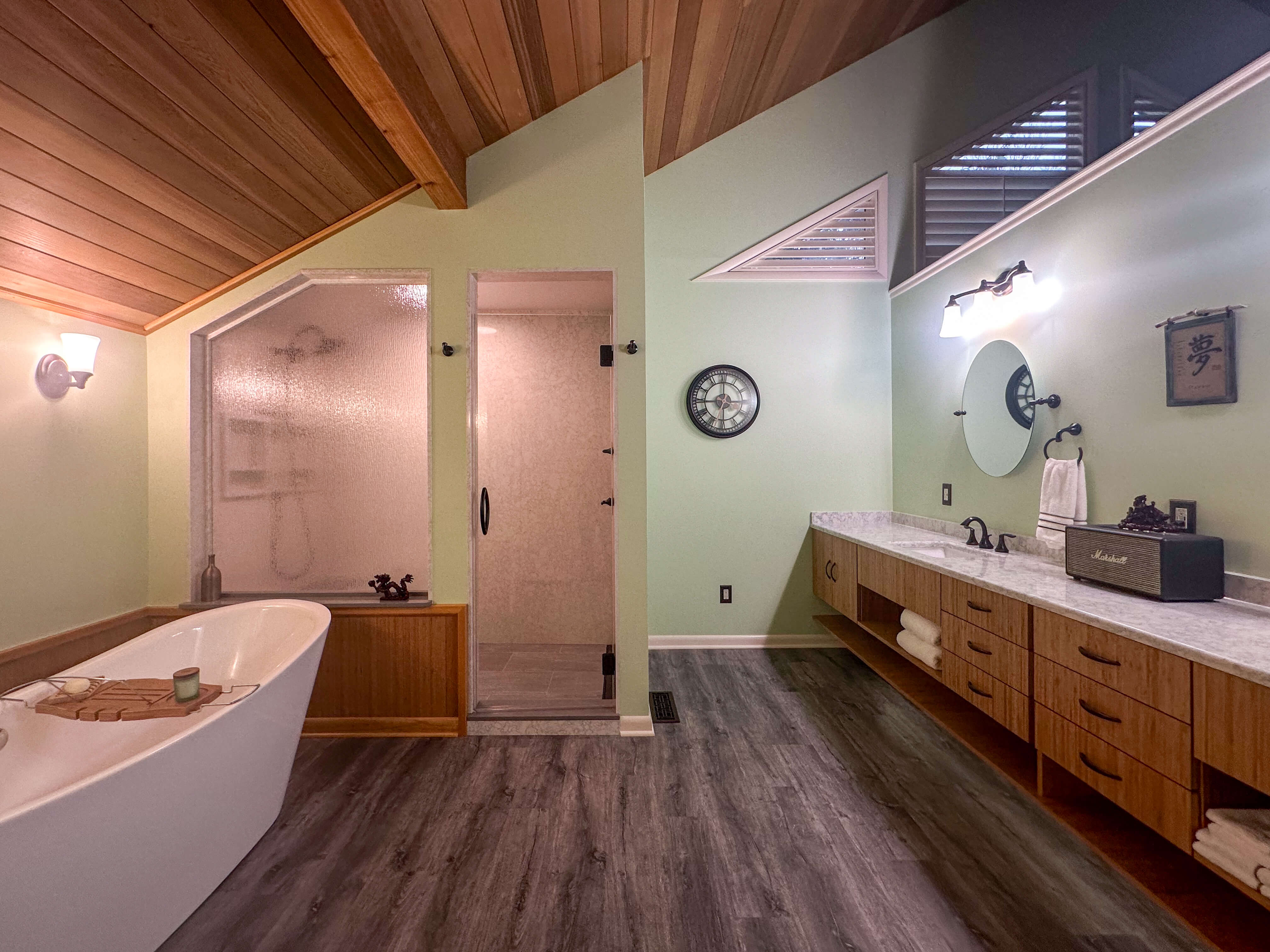
In one bathroom project, quartz was used for both the vanity and the shower walls. Its non-porous nature makes it highly resistant to moisture, while fewer grout lines simplify upkeep.
This application highlights how quartz can perform well in spaces with daily use.
Quartz Countertops Pros and Cons
Understanding both the advantages and the cons of quartz countertops helps lead to better long-term satisfaction.
The Benefits of Low-Maintenance Quartz Countertops
- Consistent color and design for a cohesive look
- Non-porous surface that resists stains, liquids, and bacteria
- Highly resistant to scratches, chips, cracks, and daily wear
- Performs well in busy kitchens with frequent sink use
- No sealing required and very little maintenance
- Durable enough for long-term use
- Works well with a wide range of cabinet styles and finishes
Stain Resistance and Everyday Living
One of the reasons quartz countertops are so widely used is their strong stain resistance. Because the surface does not absorb liquids, spills from coffee, wine, oils, or cooking ingredients can typically be wiped away without leaving lasting marks.
For busy households, this means less stress around everyday use and fewer concerns about permanent damage. Stain resistance supports kitchens and baths that are meant to be lived in, not constantly monitored.
Why a Non-Porous Surface Matters
Quartz countertops are non-porous, which means they do not absorb moisture. This characteristic plays a significant role in both durability and hygiene, particularly in areas exposed to water.
Things to Consider When Choosing Quartz
-
Quartz is somewhat heat-resistant, but not heat-proof. Exposure to very high temperatures can result in heat damage, because the resins may melt or discolor.
-
Trivets should always be placed under hot cookware
-
Quartz is intended for indoor spaces and is not suitable for outdoor use
-
Prolonged exposure to sunlight and uv rays can cause discoloration
-
It will not develop a natural patina like marble or soapstone
Quartz Countertops Designed for Indoor Use
Quartz countertops are specifically designed for indoor use, where temperature and light exposure remain relatively consistent. In these environments, quartz performs exceptionally well and maintains its appearance over time. Quartz countertops are not recommended for outdoor use due to potential discoloration from UV exposure.
Because prolonged exposure to direct sunlight or extreme outdoor conditions can affect the resins in quartz, it’s best suited for interior kitchens and bathrooms rather than outdoor kitchens or exterior applications. Understanding this early helps ensure the material is used where it performs best.
Understanding the Cons of Quartz Countertops Early in the Planning Process
When you’re gathering information, it’s helpful to understand the cons of quartz countertops alongside their benefits. This isn’t about steering you away from the material, but about setting clear expectations so there are no surprises later. Quartz performs exceptionally well in most kitchens and baths, but knowing where it excels and where it has limitations helps ensure it aligns with how you actually use your space.
This kind of transparency is essential early in the planning process, when decisions are still flexible, and materials can be evaluated in context rather than in isolation.
Choosing Quartz as Part of a Thoughtful Design Process
When you’re planning a kitchen or bath, the decisions that last tend to come from taking the time to understand how a space will actually be used. It’s less about following trends and more about choosing surfaces that feel right for your everyday routines.
Quartz countertops support that kind of planning. They offer durability, consistency, and ease of care, while also bringing a sense of elegance to the space through subtle pattern, tone, and finish. This balance allows for design choices that feel personal rather than prescriptive.
For many homeowners, quartz becomes a comfortable, well-considered option, one that fits naturally into the larger design process and continues to make sense long after the project is complete.
Creating Depth Through Design: Mixing Quartz with Natural Stone and Other Materials
One of the greatest strengths of quartz countertops is how well they pair with other materials and textures.
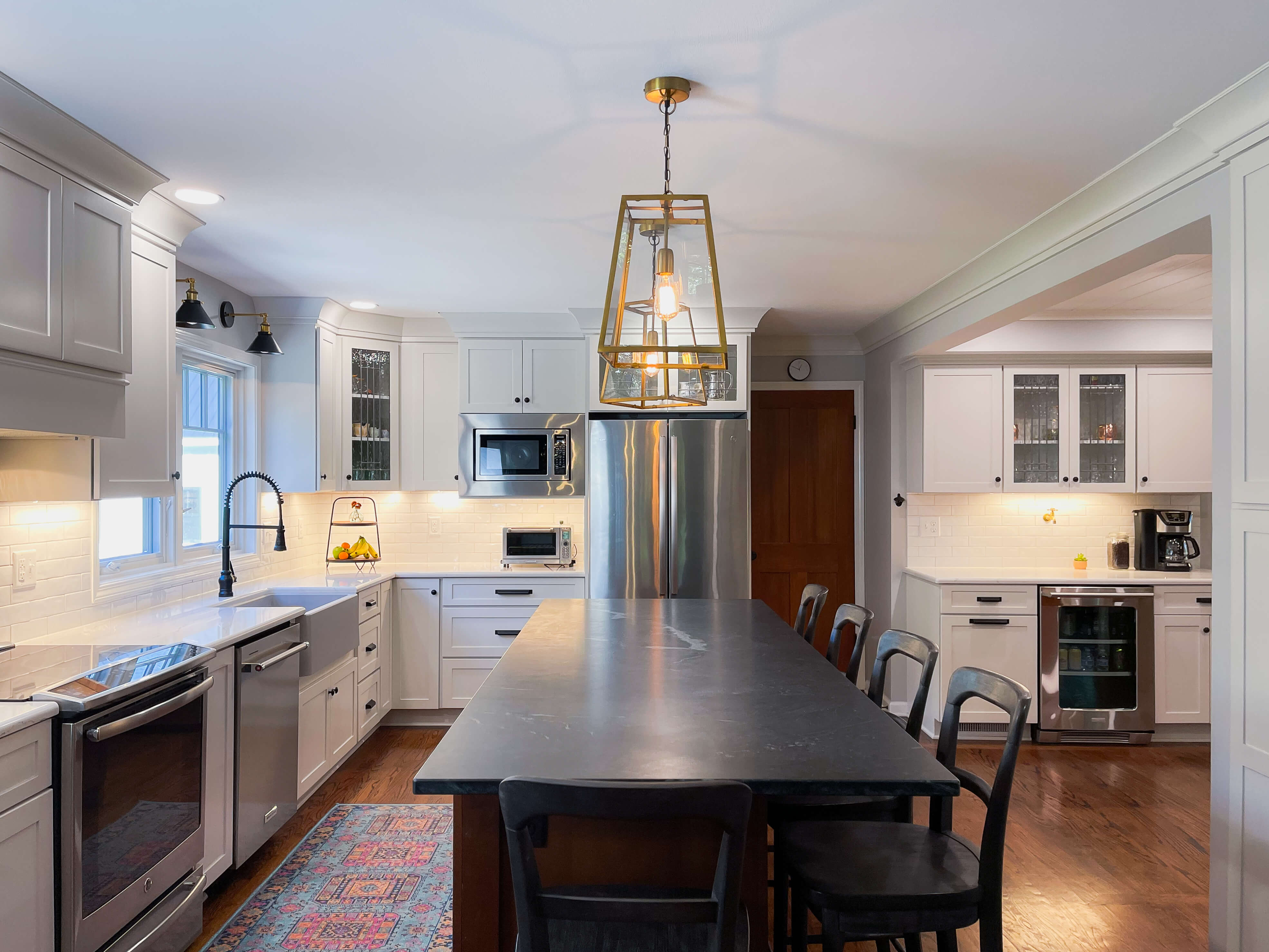
We often guide clients toward using quartz where durability matters most: perimeter counters, prep zones, and high-use areas, while allowing a different surface to take the lead elsewhere. Materials like natural stone, wood, or even laminate can introduce warmth and variation when paired thoughtfully.
Rather than selecting one surface for everything, many homeowners choose to pair quartz with natural stone to add depth and visual interest. Granite brings organic movement, while quartz provides consistency and ease of care.
When used together—such as a natural stone island with quartz around the perimeter—each surface supports a different function. The result is a space that feels layered, intentional, and grounded.
Quartz and Kitchen Lighting: Why the Pairing Matters
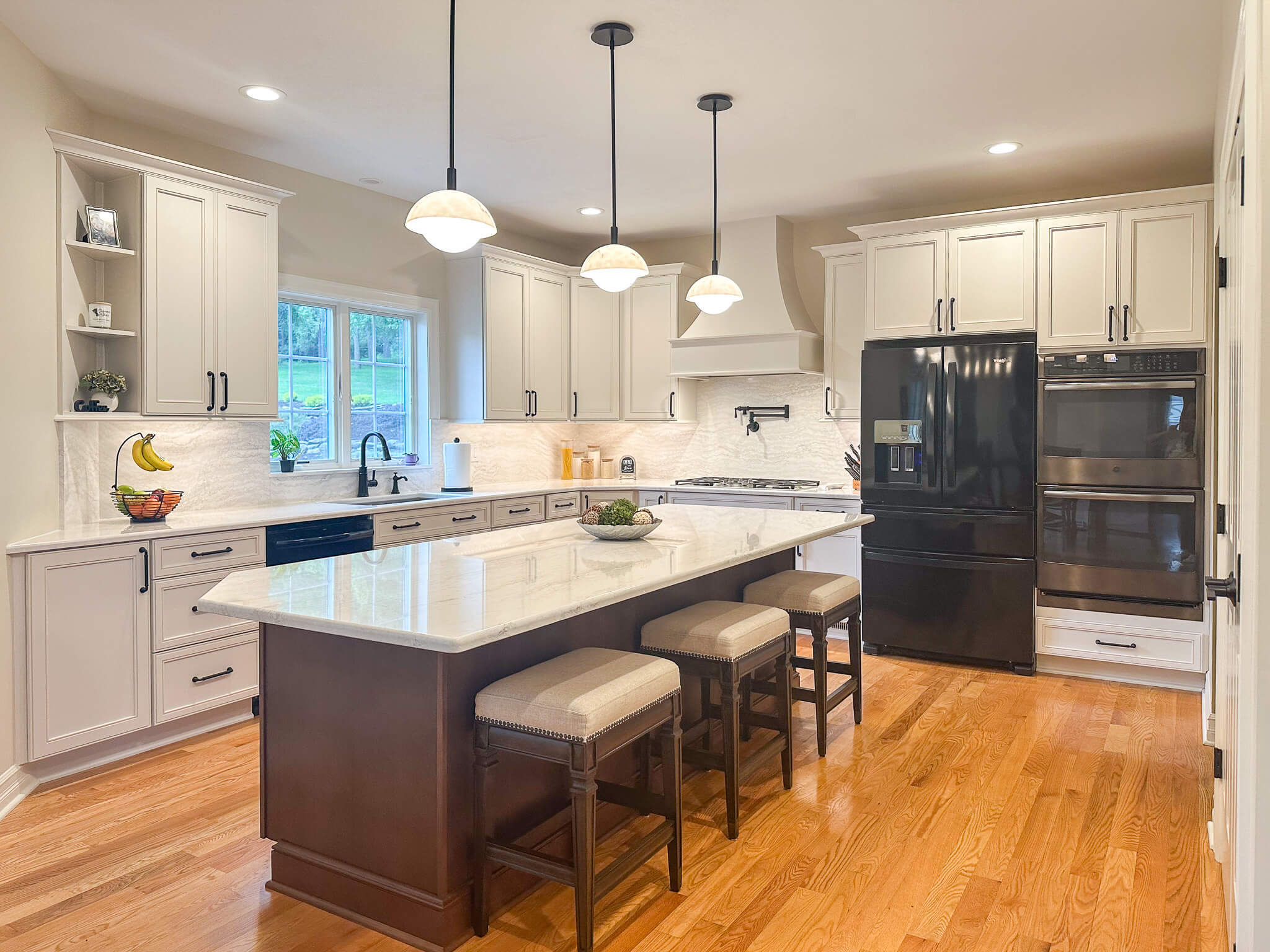
Countertops don’t exist in isolation. Lighting plays a major role in how quartz countertops look and feel throughout the day.
Under-cabinet lighting highlights subtle patterning. Pendant lighting softens reflective finishes. Natural light can shift quartz from bright to grounded depending on the surface finish.
Reviewing samples in your actual lighting conditions—rather than under showroom lights—often brings clarity and confidence to the decision.
Cost and Pricing of Quartz Countertops
Quartz countertops are typically priced by the square foot, with many options falling within an average range of $60–$120 per square foot, depending on style, finish, and manufacturer. Some may consider Quartz countertops a luxury option, and they are generally more expensive than laminate or tile alternatives. Installation costs for quartz countertops are additional to the material costs and can vary based on complexity.
Pricing is influenced by factors such as pattern complexity, slab thickness, and the overall scale of the project. Throughout the selection process, our team helps you review options thoughtfully—looking at samples, considering daily use, and discussing how everything works together in the space.
The goal is not to rush decisions, but to support clarity and confidence.
Installing Quartz Countertops: What to Expect
Installation is a precise process that relies on careful planning and experienced craftsmanship. Quartz countertops are heavy and must be fabricated to exact measurements, which is why installation is best handled by a professional and not recommended as a DIY project.
Installing quartz countertops requires a skilled professional who can level, measure, and fix the slabs on the cabinets or kitchen islands. The seams on quartz countertops can be noticeable and may require careful installation to minimize their appearance. Homeowners can choose from a range of edge profiles for quartz countertops, including standard and custom designs. Timelines vary depending on layout and complexity, but careful installation ensures the surface performs well for years to come.
Approached as part of a coordinated design process, installation becomes a seamless step rather than a disruption.
How to Clean and Care for Quartz Countertops
Caring for quartz countertops is straightforward:
-
Clean with warm water and mild soap using a soft sponge
-
Wipe spills promptly
-
Avoid abrasive cleaners
-
Use trivets for hot pans and cookware
With simple care, quartz maintains its beauty for years without sealing or special treatments.
Serving Syracuse and Central New York Homeowners
As a design-build contractor, we’ve had the privilege of working with homeowners throughout Syracuse and Central New York for over 45 years. Our role is to guide you through the process, from early planning conversations to material selection and construction, so decisions feel clear and supported at every stage. \
If you’re a Central New York homeowner thinking about a kitchen, bath, or home improvement project, we’re always happy to talk things through. We’re just a call or message away and would love to start the conversation when you’re ready.
Reach out to schedule a consultation and start planning a space that feels truly your own.
Related Posts
Countertops: Granite vs. Quartz
When we meet with homeowners to discuss a kitchen or bathroom remodeling project, we are often...
Countertops: Granite vs. Quartz
When we meet with homeowners to discuss a kitchen or bathroom remodeling project, we are often...
Project of the Month: Onondaga Hill Kitchen Makeover
Small changes can make a big impact in a kitchen. Adding new counters or appliances, a sink, a...